
Zinc

Applied Neuroscience Strategist, K-Selected Biohacker, Tantric husband, Promethean peaceful parent, Adventuring philosopher, Raconteur, and Author. He spent +14 years researching the intersection of human performance enhancement and advanced personal growth in his obsessive quest - spanning three continents - to find real-life "NZT-48."
Zinc modulates brain excitability and plays an important role in Neuroplasticity.
A player of ubiquitous biological roles in the mind and body, Zinc is found in virtually every tissue in the body and plays a role in up to 300 different types of chemical reactions.
Scientific Research
Empowering Neuroplasticity
Cognitive Enhancer
Zinc Deficiency
For Immunity
Stressed?
Sources
Food Sources
Vs ADHD
Testosterone Promoter
Antioxidant
Cofactors
Recommended Daily
Side Effects
Conclusion
This article is mostly going to focus on decoding what the human studies are saying about Zinc and how this squares up with the anecdotal experiences of Biohackers online. For more of my own personal experiences, thoughts, and comparisons, please see the written and video reviews in the sidebar.
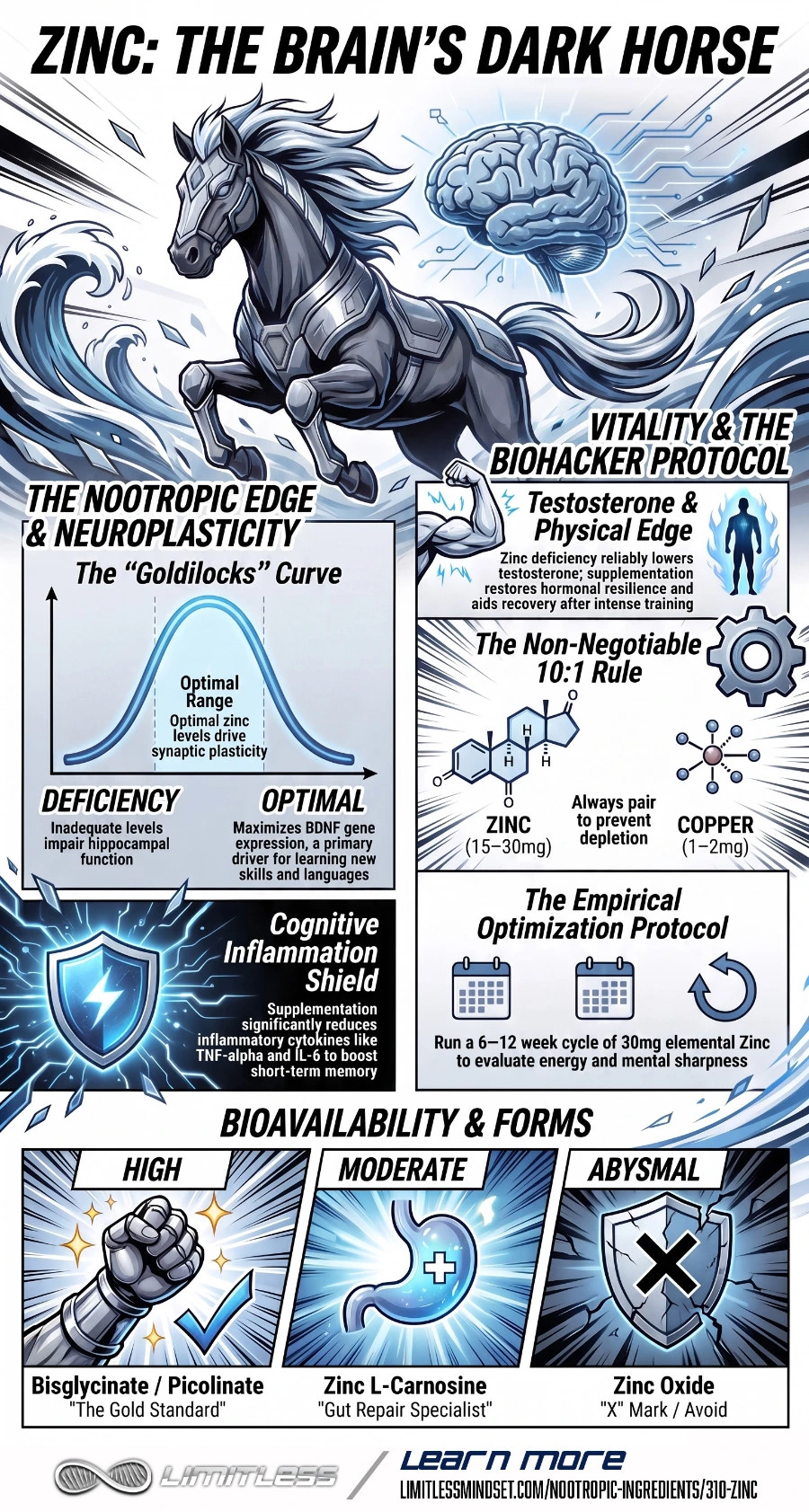
Scientific Research

It's one of the most studied nutrients on the planet; on PubMed you can find over 47,000 scientific articles of human research and over +2200 clinical trials since the turn of the millennium. That's an impressive body of research!
Recent human data has sharpened the case for Zinc as a practical performance tool rather than just a basic nutrient. For example...
A 2023 double-blind trial in middle-aged overweight or obese women found that 30 milligrams of chelated Zinc daily for twelve weeks improved scores on the Mini-Mental State Examination and the Stroop test compared with placebo, independent of any weight change. The same study noted rises in salivary Zinc and shifts in inflammatory markers. This is one of the cleaner recent signals that Zinc can move the needle on real-world cognitive metrics in people who are not severely deficient but are metabolically challenged.
On the neurochemical side, systematic reviews from 2021–2022 examined Zinc’s effect on circulating brain-derived neurotrophic factor. While one analysis showed only a non-significant trend, another found clearer increases at the 30 milligrams dose. Given BDNF’s central role in synaptic remodeling, this remains one of the more interesting mechanistic links for biohackers chasing Neuroplasticity rather than just acute focus.
For physical performance and hormonal edge, a 2023 review of the Zinc–testosterone relationship concluded that deficiency reliably lowers testosterone and that moderate supplementation can restore it, with the effect size depending on baseline status, dose, and form. Athletes under heavy training loads also show measurable drops in serum zinc after intense sessions, which helps explain why some strength and recovery studies still report benefits from repletion.
But none of these trials turn Zinc into a stimulant or a magic bullet. What they do is reinforce that keeping Zinc status solid is low-cost insurance for cognition under metabolic stress, hormonal resilience, and recovery capacity--exactly the kind of quiet edge most biohackers actually need.
Empowering Neuroplasticity

A 2009 University of Calgary study, published in Brain Research Reviews, stated:
...evidence gathered from electrophysiological, behavioural, and anatomical experiments are utilized to argue for a role of zinc in cortical plasticity.
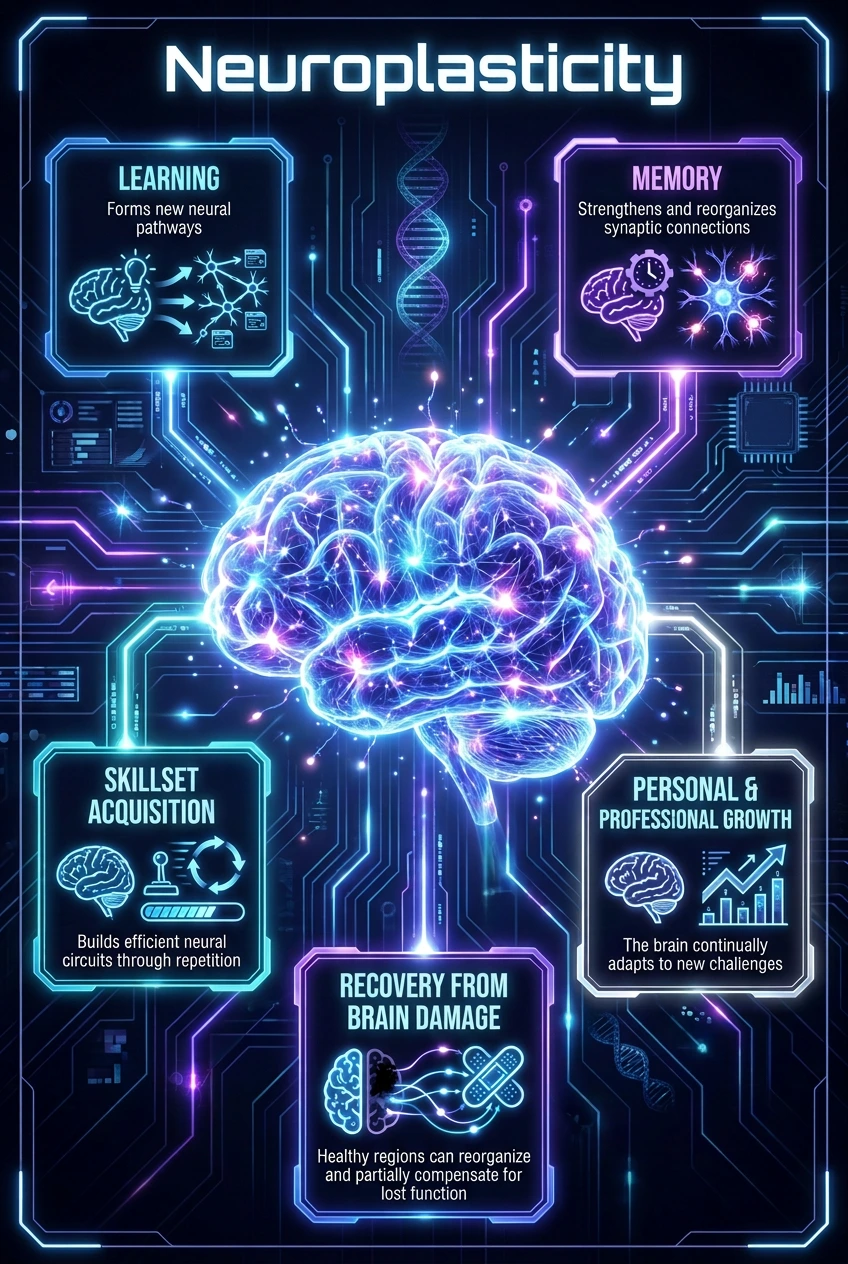
This means that Zinc is an essential driver of Neuroplasticity in our minds. Neuroplasticity is the scientific term that covers virtually all domains of personal development:
- Learn new career skill sets.
- Playing a musical instrument.
- Changing behavioral patterns in your interpersonal relationships.
- Learning a new language.
- Recovery from brain damage.
Yeah, Neuroplasticity is pretty awesome! It's also what heals your brain if you sustain a brain injury (take your Zinc, boxers!) To learn more about it, lend your ear to Limitless Mindset podcast #9: Empowering Neuroplasticity in Your Mind.
The "Goldilocks" Neuroplasticity Curve
The neuroplasticity-zinc relationship follows a distinct U-shaped curve:
-
Deficiency: Results in BDNF downregulation, loss of synaptic spines, impaired hippocampal LTP, and brain fog.
-
Optimal Levels: Maximizes BDNF gene expression, drives TrkB signaling pathways, and maintains robust synaptic plasticity.
-
Extreme Excess: Massively unbuffered excess free Zinc can flood the synaptic cleft, leading to paradoxical hippocampal toxicity and suppressed neurogenesis.
The older electrophysiological work on Zinc and cortical plasticity still holds, but the more recent BDNF data gives it a clearer molecular handle. Zinc supplementation has been shown in systematic reviews to raise circulating BDNF levels (particularly around the 30 milligrams mark). BDNF is one of the primary drivers of synaptic remodeling, so this is a plausible mechanism for the cognitive improvements seen in recent trials and for Zinc’s broader role in learning and recovery from metabolic stress. Zinc also acts as a modulator of NMDA receptors (inhibiting them at certain sites) and influences GABAergic transmission, both of which sit at the center of synaptic plasticity and excitatory/inhibitory balance. The practical takeaway remains the same, just better supported: if you are deliberately training new skills, languages, or behavioral patterns, keeping zinc status high is one of the cheaper, lower-risk levers available.
Cognitive Enhancer

Cognitive Function & Systemic Inflammation: A clinical trial published in Nutrients on
Mitochondrial & Enzymatic Protection: Modern biohacking research detailing
Dopaminergic and Basal Ganglia Integrity: Clinical investigations exploring neurodegenerative pathways have highlighted Zinc's role in stabilizing neurotransmission and protecting dopaminergic circuits, reinforcing its necessity for executive function, mental drive, and motor control.
A 2007 paper, published in The Journal of International Medical Research, The influence of micronutrients on cognitive function and performance, stated:
The searches confirmed that the water-soluble vitamins (B group and C), together with the minerals, calcium, magnesium and zinc, are most relevant to cognitive performance.
The brain's dark horse
A Swiss paper called Zinc "the brain's dark horse" and went on to say about it:
Thus, zinc homeostasis is integral to normal central nervous system functioning, and in fact its role may be underappreciated.
The paper went on to describe how Zinc plays a critical part in the chemical-electrical signal being sent from one part of the body to another.
For Immunity

Zinc has a lot to do with governing your immune system's correct functioning. If you find yourself getting ill often or during the colder season, you're almost certainly deficient.
Feeling under the weather? Here's why Zinc Lozenges are a great idea...
While zinc itself is essential for immune function, zinc lozenges, which are best if you’re trying to stave off or shorten a cold, appear to work through a different mechanism entirely. When you pop a zinc lozenge into your mouth, it begins to release ionic zinc, which is the key to its antiviral activity. Dissolving a lozenge slowly in the mouth provides a steady release of free ions into the pharyngeal region in the nasal cavity, which can have a greater effect on reducing respiratory and nasal symptoms associated with sickness than taking a zinc capsule or tablet. In fact, studies have shown that zinc lozenges can decrease the duration of a cold by five to seven days (if you think about how long a cold usually lasts, that’s almost getting rid of the cold!). (p.631)
Zinc is hands down one of the best, if not the best, immune-hacking supplements. If you read the medical literature, this is one modality that has been shown to work over and over again. (p.630)
Zinc supplementation, I suspect, played an important role in my two brushes with COVID this decade being a walk in the park.
Zinc Deficiency

According to a 2007 University of Colorado paper, Zinc deficiency is a global problem, even in developed countries, and results in...
- Stress, anxiety, and Irritability
- Depression
- Loss of appetite
- Wounds healing slowly
- Acne and alopecia (hair loss)
- Schizophrenia
- Hyperactivity and autism
- Low testosterone and low libido
The deficiency also manifests itself physically as stunted growth in children, diarrhea, hair loss, and dry skin. Vegetarians are at the highest risk for Zinc deficiency, but it's also a problem for alcoholics and women on birth control.
Phytates - The Enemy of Zinc
You've heard of phytates before and probably know that our health is frequently f*cked by phytates (that's the kind of alliteration that will remind you to be wary of phytates). High Phytate foods include beans, seeds, lentils, nuts, and grains. So should you go on a carnivorous diet? Not necessarily; I love nuts and whole grain breads. This is why we need to supplement Zinc.
The truth about testing:
It's futile, as explained by Dr. Robert Selig here (in the best video on Zinc I could find on the internet)...
Plasma and serum zinc tests are notoriously crude indicators because...
-
Less than 1% of total body zinc resides in the blood (the vast majority is localized inside cells and bone tissue).
-
The Acute Phase Response skews results. Any systemic inflammation, stress, or mild infection causes the body to shift plasma zinc straight into the liver, resulting in a false-positive reading for zinc deficiency.
-
Hair Tissue Mineral Analysis (HTMA) can easily be distorted by heavy metal binding, hair dyes, or metabolic transport issues.
-
A Zinc taste test (ZTT) can be done orally; how this works: You swish a liquid zinc sulfate solution in your mouth to see if you taste anything. A lack of taste means you lack Zinc, because a mouth enzyme needs Zinc to work. (Although some researchers argue this is not a particularly reliable test).
Deficiency is dire, but figuring out if you're actually deficient is squirly. Here's where the "doctor of the future"--a Biohacker practicing rigorous empiricism gets real practical with the...
Empirical Optimization Protocol
Instead of the fool's errand of trying to determine deficiency, execute an Empirical Optimization Protocol: Run a cycle using 30 milligrams of elemental Zinc (Bisglycinate or Picolinate) paired with 1.5 milligrams to 2 milligrams of copper; if you're deficient after two months, you'll feel about a decade younger!
Since Zinc is inexpensive, relatively safe at moderate doses, and the downside of missing a functional deficiency is real, the pragmatic Biohacker simply runs a 6–12 week cycle of 30 milligrams elemental Zinc (with copper--CRUCIALLY--and a meal) and evaluates how they feel (energy, sleep, libido, mental sharpness, wound healing) rather than chasing imperfect lab numbers. If symptoms improve, you probably needed it; if they do not, drop back to a lower dose or focus elsewhere.
Stressed?

Don't be such a stoic tough guy or gal when it comes to stress; instead, reach for some Zinc. There have been +60 published human clinical trials, specifically on Zinc and stress, published in the past decade.
It minimizes oxidative stress that causes you to age prematurely and feel overwhelmed. Although I'd wager that things like meditation, exercise, and the Adaptogenic herbs would have a more noticeable effect in the stress management department. I had a fun discussion of Zinc and other stress-busting nutrients with my brother, Woody, back in Limitless Mindset Podcast #13: Life Hacking Stress.
Sources
Zinc supplementation is a great idea for anybody whose profession places high cognitive performance demands on them; accountants, bankers, surgeons, day traders, programmers, executives, or professionals who just need to remember a lot of mission-critical data.

PureBulk.com is my go-to recommended source in North America. They offer several forms of COA-verified Zinc, capsuled (most convenient) and powdered (cheapest) - something few of the stacks and multivitamins with Zinc can offer. Next order I place with them, I'll pick up a bottle of their capsuled Zinc Bisglycinate(powdered, it's a lot cheaper, but measuring out 20-40 powdered milligrams every day is tedium that I simply can't countenance!)

Of course, Zinc is included in almost all multivitamins, but they often use the useless Zinc oxide form. The one decent Nootropic multivitamin product I've tried was the Clarity Daily Nootropic stack, which used Picolinate.


Confused as to which form is best?
Zinc Bisglycinate: Exceptional bioavailability, highly gentle on the stomach, and superior intestinal absorption due to its amino acid chelation.
Zinc L-Carnosine: Ideal for dual-action benefits, providing targeted repair to the gut lining alongside systemic cognitive support.
Zinc Picolinate: Proven track record in clinical trials with high tissue absorption rates.Ben Greenfield clarifies in Boundless...
Zinc picolinate, a more bioavailable form of zinc, is a powerful antioxidant, anti-inflammatory, and immune-system-boosting mineral that also helps improve memory, mood, and neuronal growth. (p.170)
To make things easy, when trying to choose the better-absorbed forms of most vitamins and nutrients if you don't have the time to do your research, anything ending in -ate is a good bet. Picolinate, glycinate, chelate - you get the idea.
Forms to avoid: Zinc Oxide (abysmal absorption rate) and Zinc Sulfate (frequently causes nausea).
Downloadable Zinc?
You may be interested in taking it as an infoceutical - a non-pharmacological, side-effect-free version of the supplement that takes advantage of the phenomenon of water memory - which is imprinted on water via quantum collocation and electromagnetism using this device...

Infocueticals typically have 1/3 or half the effect of the actual medicine being imprinted. If you're skeptical of Infopathy, that's understandable; it's a game-changing application of a little-known scientific phenomenon. But I'd urge you to evaluate the scientific evidence (presented in my biohacker review) that downloadable medicine is no longer science fiction...
Food Sources

Zinc is synonymous with a high-protein diet, especially red meats and seafood; some great sources include salmon, lamb, eggs, and beef. As such, vegetarians and vegans should supplement or at least eat a bunch of pumpkin seeds!
Vs ADHD

A 6-week, double-blind Tehran University study of 44 children demonstrated Zinc as statistically effective in treating ADHD. To quote the study:
This double-blind, placebo-controlled study demonstrated that zinc as a supplementary medication might be beneficial in the treatment of children with attention-deficit hyperactivity disorder.
Testosterone Promoter

Zinc is a major component of maintaining healthy testosterone for men. A 2006 Turkish study of wrestlers demonstrated that oral Zinc supplementation was beneficial. This drastically affects many dimensions of the male experience:
- Physical performance and energy
- Building muscle and strength
- Ambition and productivity
- Sex drive
- Stress management
Antioxidant

More good news: it's also a powerful antioxidant that scavenges free radicals and is particularly good at detoxifying the brain from heavy metals like iron. A Saudi Arabian study demonstrated an anti-aging effect of Zinc wherein the nutrient played a beneficial role in diminishing cumulative oxidative changes.
Cofactors
- Take a copper supplement to balance Zinc supplementation (in a 10:1 ratio, according to Dr. Eric Berg) if you don't eat liver regularly.
- It's a particularly good idea to take Zinc with water-soluble B Vitamins (especially B-6).
- A report on Longecity.org about Zinc+Lysine: "I'm quite surprised with the noticeable effects on cognition... Really gives me a calm and sharp boost throughout the day for some reason."
Usage & Dosage
Ideally take it with meals to minimize nausea.
Forms matter: picolinate and bisglycinate consistently outperform oxide and gluconate in absorption studies.
Cycle higher doses rather than stay elevated indefinitely. Most people do well with 8–12 weeks on, then a break or drop back to a lower maintenance dose while checking how they feel and, if possible, copper status.
Recommended Daily
Official RDAs (8–11 milligrams for adults) are maintenance figures for the average person eating a mixed diet. They are not optimized targets for cognitive performance, hormonal support, or recovery under training stress. The upper intake level sits at 40 milligrams of elemental Zinc per day for chronic use; going above that for long periods reliably depletes copper and can cause other issues.
Practical ranges that match the better recent trials and biohacker experience:
- Everyday cognitive/general optimization: 15–30 milligrams elemental zinc daily (zinc picolinate or bisglycinate preferred for absorption).
- Short performance or repletion cycles (4–12 weeks): 30–40 milligrams elemental, ideally with 1–2 milligrams copper to protect the Zinc–copper ratio.
- Higher medicinal doses (50 milligrams elemental or more) appear in some older hypogonadism protocols, but they should be time-limited and monitored.
The Non-Negotiable Copper Rule
Whenever you supplement with more than 15 milligrams to 20 milligrams of elemental Zinc daily, you must balance it with copper. High zinc intake upregulates intestinal metallothionein, a protein that preferentially binds copper and prevents its absorption. Maintain a 10:1 to 15:1 Zinc-to-Copper ratio (e.g., pair 30 milligrams of elemental Zinc with 2 milligrams of copper).
Elemental Yield vs. Compound Weight
Always verify the elemental yield on the product label. A 150-milligram capsule of Zinc Picolinate or Zinc Gluconate usually provides only 15 milligrams to 30 milligrams of actual elemental Zinc.
Side effects
The most common are Nausea or stomachache, and they send a very clear signal, according to Dr. Peter Osbourne. You should have taken it with food, or you are Zinc-sufficient and taking too much.
Risk Grade: A-
- Extremely well-studied essential mineral with tens of thousands of human papers and a clear, well-mapped toxicity profile. The downside risk is low and predictable when you stay under the 40 milligrams elemental upper limit.
- The main real-world risk is copper depletion from chronic high dosing (especially 30–50 milligrams for months). This is easily managed by pairing with 1–2 milligrams of copper or cycling.
- Mild gastrointestinal upset is the most common complaint and is almost always fixed by taking it with food or switching to a gentler form (picolinate or bisglycinate).
- No addiction potential, no black-swan neurological or organ toxicity at normal biohacking doses, and the benefit-to-risk ratio is excellent for anyone who is even mildly suboptimal.
Conflicts: Not recommended with certain antibiotics (Quinolone & Tetracycline)
Conclusion

So, here’s the deal: Zinc is like the secret sauce for keeping both your brain's Neuroplasticity in check and your male vitality firing on all cylinders. It’s not just a mineral; it’s your body’s unsung hero, helping everything from immune defense to testosterone production. Want to boost your cognitive flexibility and keep those manly vibes strong? Then Zinc’s your guy. Just don’t go overboard, or you might find yourself on the wrong side of too much of a good thing. Keep it balanced, biohackers!
Listen to this rock song about Zinc...
Nootropic Ingredients
Photos


Videos


-
{{#owner}}
-
{{#url}}
{{#avatarSrc}}
{{name}} {{/url}} {{^url}} {{#avatar}} {{& avatar}} {{/avatar}} {{name}} {{/url}} - {{/owner}} {{#created}}
- {{created}} {{/created}}


 ON RUMBLE
 on twitter